Events
Each academic year the Office of the Provost and Dean of the Faculty offers a variety of lectures, luncheons and faculty development sessions that feature Smith faculty and visiting professors.
Liberal Arts Luncheons
Liberal Arts Luncheons are sponsored by the Provost and Dean of the Faculty. LALs will be held on Thursdays in the Neilson Browsing Room, unless otherwise noted. Talks begin at approximately 12:10 p.m., and a complimentary lunch is offered for the first 40 attendees (first come, first served).
Date |
Talk |
Presenter |
|---|---|---|
September 17 |
How Gender Presentation Shapes Voter Evaluations of Lesbian and Gay Cabinet Ministers |
Joey Cozza, assistant professor of government |
September 24 |
The Power of Experiential Learning—MacLeish Field Station |
Paul Wetzel, curriculum and research administrator |
October 1 |
What Is Landscape Studies? |
Steven T. Moga, associate professor of landscape studies |
October 8 |
Gloria Steinem: The Unlikely Development of an American Feminist Icon |
Lauren Duncan, William R. Kenan, Jr. Professor of Psychology |
October 22 |
Considering Neurodiversity: Pedagogy for Learning Differences |
Kementari Whitcher, lecturer in statiscal and data sciences |
October 29 |
The Shape of Attention |
Chris Aiken, professor of dance |
November 5 |
Summer 2026 Arts Afield Faculty Fellowship Reflections |
Michele Wick and Joanne Benkley, Arts Afield co-chairs and faculty fellows |
November 19 |
Handedness Shapes Postural Control in Gesturing |
Ingo Helmich, assistant professor of exercise and sport studies |
December 3 |
The Mothitor: Fostering Learning and Connection via Automated Moth Monitoring |
Mariana Abarca, assistant professor of biological sciences |
Sigma Xi Luncheons
Sigma Xi, the Scientific Research Society, meets regularly for talks and a complimentary lunch throughout the year. Talks are open to all faculty, staff and students.
Talks begin at approximately 12:10 p.m. in McConnell Auditorium. A complimentary lunch is offered in McConnell Foyer. Please visit the Sigma Xi website for the schedule.
Faculty Development Events
The Office of the Provost offers a variety of faculty development workshops and events throughout the year. Please visit the office’s Faculty Development webpage for the schedule.
Lectures


Valerie Traub
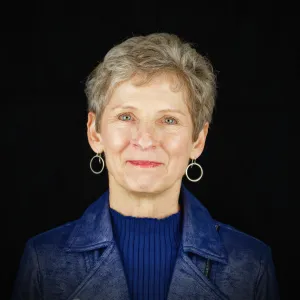
Ruth and Clarence Kennedy Visiting Professor
Spring 2025
Valerie Traub is the Adrienne Rich Distinguished University Professor Emerita of English and women’s and gender studies at the University of Michigan. She is the author of Thinking Sex with the Early Moderns (2015), The Renaissance of Lesbianism in Early Modern England (2002), and Desire & Anxiety: Circulations of Sexuality in Shakespearean Drama (1992, reissued 2014). Both Thinking Sex and The Renaissance of Lesbianism won the Best Book award from the Society for the Study of Early Modern Women. In addition, she has edited several collections, including The Oxford Handbook of Shakespeare and Embodiment (2016), which received the Ronald H. Bainton Prize for Best Reference Work in 2016. Her latest co-edited collection is Ovidian Transversions: Iphis and Ianthe, 1350–1650, while forthcoming is another co-edited collection, Reproductive Justice After Roe: Lessons from the Premodern Classroom. Her current project is Mapping Humanity in the Early Modern West: Classification, Norms, Biopolitics, which examines how gender, race, and sexuality in cartographic and anatomical illustration comprise a prehistory of the concept of the normal.
67th Katharine Asher Engel Lecture
The Engel Lectureship is granted annually to a Smith faculty member who has made a significant contribution to his or her field. The lecture was established in 1958 by the National Council of Jewish women in honor of Engel, its onetime president and a 1920 Smith graduate. The 2026 Engel Lecturer will be Nancy Whittier.
About Nancy Whittier
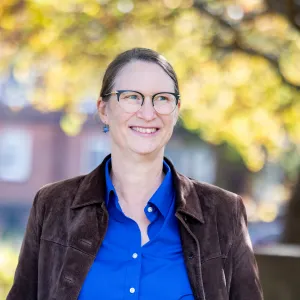
Nancy Whittier is Sophia Smith Professor of Sociology at Smith College, where she has been teaching since 1992. Her research examines the organization and consequences of social movements, focusing on organizing by or for feminists, queer people, survivors of child sexual abuse, and opponents of gendered violence. She has studied how participating in activism shapes people’s future work, personal life, and activism in other movements. She has examined how activists work to transform the emotions of participants and the general public, and how they work to change cultural meanings and identities of disadvantaged groups (such as women, feminists, lesbians, or survivors of sexual assault). She has also studied how activists shape federal policy, which results from shifting power among allies and opponents and from cultural processes inside Congress and agencies that establish expertise and construct knowledge and emotional resonance for issues and policies. Overall, her work emphasizes the importance of identity, culture, and emotion for understanding what is accomplished both inside movement organizations and in the state.
Her most recent publication, “Theorizing Gender and Social Movements Beyond the Binary,” rethinks one of her earliest contributions – theorizing how gender shapes social movements – with an updated model of gender that moves beyond a binary, static model. She is currently working on a project tracing U.S. social movements around gender and sexuality from the 1980s to the present that aims to show how both social movements and state structures established in the 1980s laid the groundwork for the subsequent decades.
She is the author of Frenemies: Feminists, Conservatives, and Sexual Violence (Oxford University Press, 2018), The Politics of Child Sexual Abuse: Emotions, Social Movements, and the State (Oxford University Press, 2009), Feminist Generations (Temple, 1995), Statistics for Social Understanding (with Tina Wildhagen and Howard Gold), co-editor of Social Movements: Identities, Culture, and the State (Oxford University Press, 2002, with David S. Meyer and Belinda Robnett) and Feminist Frontiers (Rowman & Littlefield, 2020, with Verta Taylor and Leila Rupp), and author of numerous articles on social movements, gender, and sexual violence.
