‘Educating the Whole Person’
News of Note
Smith College’s new strategic plan centers learning, leading, and belonging

Published March 3, 2026
Bringing academic learning to life; developing hearts as well as minds; supporting students in finding their present joys and future paths.
These are just some of the ways that campus community members who helped shape Smith College’s Compass 2035 strategic plan describe the goals of the latest blueprint for the college’s future.
More than 4,000 Smith community members contributed to the new 10-year strategic plan that was endorsed by the board of trustees in December, including serving on working groups, participating in small-group listening sessions, and responding to a college-wide survey.
On March 3, President Sarah Willie-LeBreton will host a celebration in recognition of the 18-month community effort behind the new plan. The special First Tuesdays event begins at 8:30 a.m. in the Campus Center, with a greeting from the president at 8:40 a.m.
In a letter to the community announcing Compass 2035, Willie-LeBreton expressed her optimism about the future the plan envisions. “Smith has always been a place where bold ideas take root,” she wrote, “where emerging leaders find their footing, and where a spirit of compassion and care for the greater good takes flight on the wings of academic excellence.”
Drawing on the metaphor of a compass, Willie-LeBreton added, “Your imagination, dedication to our mission, openheartedness, and steadfast belief in all that this college can be serve as points on a map, aligning our path forward and orienting us toward our true north.”
The strategies outlined in Compass 2035 were developed by three working groups: Academic Exploration, Leadership and Career, and Community. Their recommendations support the plan’s four main goals of reimagining learning and discovery, connecting education with purpose, strengthening a culture of well-being and belonging, and securing the college’s future.
Here, Provost Daphne Lamothe and Dean of the First-Year Class Jennifer Joyce—co-chairs of the Academic Exploration Working Group—offer a detailed look at the plan.
What stands out to you about Smith’s new strategic plan?
Jennifer Joyce: “Something that struck me about the process was how wonderfully attentive and committed Smith is to ensuring that the student experience is at the forefront of the next 10 years. What surprised me is how the seemingly separate goals of each working group arrived with at least one overlapping element, which was this shared purpose of elevating and integrating the first-year experience and beyond.”
Daphne Lamothe: “In the listening sessions that I participated in, we were really wrestling with reaffirming the principles and the values and the importance of a liberal arts education: the goal of educating the whole person. There are parts of the strategic plan that focus on the importance of academic exploration and discovery, and there are parts that focus on wellbeing, social bonds, and connection. The emphasis on sustainability is a theme that runs throughout all of the initiatives—and that’s not only environmental sustainability, but also sustainability as it refers to the people who work here. How do we keep sustaining for ourselves? Because part of what makes Smith special is that it’s a mission-driven organization.”
What are some of the specific issues the academic working group focused on?
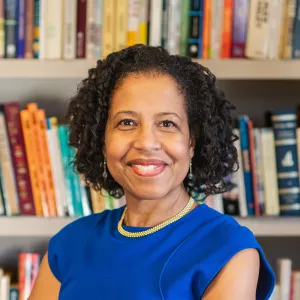
DL: “We talked about innovation in teaching and supporting innovative teaching methods and faculty research—recognizing that that contributes to the development of a really vibrant and inspiring array of courses that students can choose from. And then we talked about wayfinding and advising. How do you help students find those exciting opportunities? The beauty of a liberal arts education is that it’s set up for you to explore and engage in self-discovery. How can we support that through our advising system, the strength of certain majors, and resources and supports for faculty in the work that they are doing?”
How does the plan, as you mentioned a moment ago, center the first-year student experience?
JJ: “This year, 20 percent of our first-year class is first generation. It’s also the largest class we’ve had in recent years, and with these new students, we have increased diversity in our student body. We talked a lot about a 360-degree advising model that lives in different spaces—in the classroom, in their houses, and their activities outside of class. So that as they move through their years at Smith, they would have the guidance necessary to dive deeper, ask the bold questions, stay curious, and grow intellectually. We’re also looking at our unique residential housing model and how there may be really creative ways to build living and learning communities so that students are getting what they need in all aspects of life on campus. I’m delighted that Compass 2035 aims to strengthen the first-year experience and beyond, and I’m looking forward to the ways that every new student at Smith reaps the benefits of this seamlessly integrated academic and co-curricular experience.”
This is a challenging time in higher education, with questions being raised in some quarters about the value of a liberal arts education. Did that come up in your working group’s discussions?
DL: “100 percent! We talked about how at Smith in particular, to have one of the strategic plan goals be career readiness is unusual. Because in the liberal arts tradition, we don’t have pre-professional majors and that’s intentional. We were explicit about the fact that in this moment, we have fewer students coming to Smith who come from generational wealth and more students who are receiving financial aid. We owe it to them to attend to the pressures they will face when they graduate.”
How do we ensure that the ideas in this plan don’t just stay on a shelf?
DL: “Part of what I found interesting about this experience is that the strategic plan was not imagined so much as an opportunity to come up with things we’ve never seen or done before. Rather, it was about elevating, amplifying, strengthening, and expanding the things that are unique about Smith and that we really treasure and value. For example, I’m leading an initiative right now in my office to think about how Smith’s many centers [such as Wurtele Center for Collaborative Leadership and Lewis Global Studies Center] might be reimagined, co-located, and collaborate in ways that can continue to expand faculty scholarship.”

JJ: “Within each of our meetings, every participant was focused on action. We refused to land on a model or a priority that didn’t feel genuine to Smith and our mission—and that would include our mission as a women’s college. By offering academic exploration in ways that we’re continuing to enhance, we’re already making inroads in a culture, and in a world that needs more voices from people who have graduated from a place like Smith.”
What’s one really important thing for people to know about Compass 2035?
DL: “To keep talking to each other, because we’re listening. Those of us who are in positions to move initiatives forward are listening and integrating what we hear into the work we are doing right now.”
JJ: “I think about the tagline of this plan: ‘Discover Everywhere, Lead Anywhere, Belong Here.’ It’s a simple phrase, but it really articulates the vision and the offerings of this new plan because it’s a commitment to exploration and a dedication to cultivate future leaders. It speaks to what’s unique about Smith—how we empower agency within our students so they can find their own way, while also having our support. That feels very authentic to the Smith experience.”