A view of the Florence skyline

Florence is a historic city of uncommon beauty and importance in European history, arts and humanities. While gaining an appreciation of medieval and renaissance Florence, experience contemporary life in this thriving, bustling city in Italy.

Application Deadline

Smith student applications for the 2026–27 academic year, fall 2026, and for spring 2027 are due by Monday, February 2, 2026. Smith Programs Abroad accept applications from students of any gender identity. Guest student applications will be accepted until the second Monday in March (March 9, 2026) on a space-available, rolling basis; applying by the February deadline is encouraged.

The Curriculum

The Smith program in Florence offers a curriculum for a full year abroad, as well as an option to study in Florence for a single term.

Each semester begins with two weeks of intensive language study, cultural orientation, an art history course and excursions around the city. All students must attend an advanced language course at the Smith Center ("Sede"), offered each semester. Yearlong students will be required to take the language course in the fall and a Smith course of their choice in the spring. Each semester students are permitted to take up to three Smith courses. The remaining courses will be taken at the University of Florence. Tutoring will be available yearlong as necessary.


Resident Administrative Director: Loredana D'Elia
Smith Faculty Liaison: Maria Succi-Hempstead, Italian Studies
Academic Coordinator: Guido Reverdito, Ph.D.


Over two weeks, students take an intensive Italian language course at the Smith Center ("the Sede"), as well as an Art History mini course focusing on Medieval and Renaissance art in and around Florence.

In addition to the two-credit academic orientation, students divided in small groups are escorted by faculty to explore the city, get introduced to the transportation system, the best parks, shops, markets, libraries, and all the cool places where Italian students gather to eat, drink, listen to music, dance, and talk.

Track A: University Studies Program

  • Orientation: two-week interdisciplinary introduction to Italian language and art history (2 credits)
  • Italian language course taught at the Smith Center (4 credits)
  • Two additional Smith courses at the Smith Center (4 credits each)
  • At least one course at the University of Florence university; required for all students (4 credits)

Track B: Practicum Program (Fall Semester Only)

  • Italian language courses taught at the Smith Center (4 credits)
  • Practicum course (taught in English, 4 credits)
  • Two Smith Center courses (taught in Italian, 4 credits each)

Internship and Community Service Placements

Smith's long-standing relationship with many Florentine and Tuscan organizations has resulted in a wide variety of possible part-time internship and volunteer placement opportunities for students. Serving as an intern or community volunteer is a fantastic way to meet local Italians, understand Italian society and culture, and to offer reciprocal benefits to the community from which you are learning Italian language and culture.

Many of these internships have resulted in research proposals for summer International Experience Grants or prospective Fulbright research proposals.

A sample of recent internship placements includes:

  • Uffizi Library
  • Children's Library Santa Croce
  • Tela di Penelope Consortium (restoration of ancient fabric and leather)
  • UNIFI Farmacology/Neuroscience Lab
  • Organic Farm Orto Bioattivo
  • Misericordia di Firenze – volunteering on Ambulances or assistance to individuals with disabilites
  • Specola Museum of Natural History
  • Vista Magazine
  • Florence Cathedral (Duomo) Choir
  • Fiorentina Nuoto (Swim Team)
  • Casa San Michele (Women’s shelter)
  • School of Italian for immigrants
  • Angeli del Bello in Florence
  • I ragazzi di Sipario. Art laboratories with young adults with special needs

Courses

About the Smith Center

The Smith Center is centrally located on the second floor of a historical building that dates back to the 17th Century. The premises are very spacious and full of natural light, and some rooms have frescoed ceilings and mosaic floors; the main classroom overlooks the inner garden and is incredibly quiet.


Artists, Saints and Patrons: The Secrets Behind the Monuments that Made Florence Great

4 credits, Fall 

This course focuses on some of the most important monuments of Florence, examining their history and art. The result will be the analysis of these monuments from different perspectives, studying the artists who created them, the preachers and saints who lived in them and the patrons who sought and financed them. Particular attention will be devoted to Medici patronage, specifically the figures of Cosimo the Elder, Piero the Gouty and Lorenzo the Magnificent, who had such a profound influence on the artistic events of the fifteenth century in Florence. The workshops on fresco and panel painting will offer deeper insight into the works observed and analyzed during our visits, letting the students see and experience different artistic techniques.

Innovations in Early Childhood Education: Philosophy, Practice, and Public Policy in Pistoia, Italy

4 credits,Fall

Internship and typically involves (but it is not limited to) an academic year commitment. The internship can take the place of a Sede course in both fall and spring, but not a University of Florence course. The internship course is graded, and requires a presentation and a major research paper turned in to the Pistoia program coordinator at the end of the spring semester. The internship, in addition to attendance at an educational center, includes meetings with the Pedagogical Coordination, with families, and equally knowledge of the network of services and the city. Through this type of approach, the students have the opportunity to get to know the school with its practices, its values, its pedagogical foundations, but also a city that works for the youngest citizens and families.

Italian Social and Cultural History: From Fascism to Nowadays

4 credits, Fall 

A multidisciplinary approach to contemporary Italian culture. It also takes into account the historical reasons for the current political situation. The course offers an overview of Italian 20th century history and includes the study of important aspects of Italian life: regional differences, local identities, emigration and immigration, the integration of recent immigrants into Italy, internal fighting during WWII, terrorism in the late ‘60s and 70s, organized crime and the Mafia, Italian politics, sport, the evolution of the concept of family and the role of women in society.

Italian Stylistics (ITL 240)

4 credits, Fall or Spring

A review of basic and advanced language structures. It includes a variety of activities to learn different linguistic registers: collaborating with a local radio station, visiting a newspaper, preparing video material and improving linguistic skills through a full immersion in the city and in Italian life. This is a required course for all students unless they place out of this language level.

History of Costume, Fashion and Artistic Craftsmanship

4 credits, Spring

The course analyzes the birth, evolution, decline, rebirth and the most recent developments of Italian fashion, up to the contemporary Made in Italy. Topics of particular interest and critical analysis are: craftsmanship, circular economy, sustainable production. The course has an interdisciplinary approach, so the trends of Italian fashion over time are decoded in relation to various disciplines, including: history, art history, economics, gender studies, society in a national and international economic and social context. The course will also analyze the relationships between fashion and other disciplines of communication: cinema, photography, the web, journalism, social media. Visits and excursions are essential to underline the leading role of Florence, and of Italy from its origins to the present day and allow us to deepen what was discussed in the classroom, in an authentic context. The course aims to provide the necessary technical and linguistic competence to understand and analyze fashion as a complex socio-cultural phenomenon, alternating both a chronological and thematic approach. In particular, the enormous contribution of Florence, Rome and Milan in the affirmation of Italian fashion in the world and innovation will be emphasized. An integral part of the course is the direct experience of the students: visits to museums and exhibitions, practical workshops and individual and group activities. These practical experiences are to be considered essential elements of the experiential teaching approach adopted by the teacher.

A Factory of Genius: Workshops and Painters in Lorenzo the Magnificent’s Florence

4 credits, Spring

The course focuses on the Florentine painting workshops of the fifteenth century, examining their typology, composition, dynamics between painters and artistic production. After dealing with the problem of the artist's training, the course will focus on the different types of production, in particular those intended for home furnishings and ecclesiastical furniture. The relationship between master and pupil (e.g. Verrocchio and Leonardo, or Botticelli and Filippino Lippi) and family workshops (e.g. the Ghirlandaios) will also be examined. We will try to recreate the daily life of the Renaissance atelier, through drawings depicting artists at work and reading their jokes and pranks. The classroom lessons will be alternated with numerous visits guided by the teacher, in which it will be possible to admire - in churches and city museums - works that testify to collaborations between artists or exemplify particular types of works of art (for example altarpieces, chests, roundels, etc.).

Words Beyond the Page: Six Centuries (1500-2000) of Italian Classics Beyond the Confines of the Text

4 credits, Spring

The main purpose of the course is to bring students closer to some works of Italian literature from the fourteenth to the twenty-first century through their cinematographic transposition. To this end, the course will open with a theoretical approach during which the relationships that traditionally exist between the written page and its translation on the big and small screen will be presented. For each century, with the exception of the twentieth century, to which there will be particular attention determined not only by the richness of the adaptations made but also by the greater linguistic accessibility of the transposed works, a combination consisting of a literary work and its translation into images will be proposed.

All students take one or two 4-credit courses at the University of Florence during the Spring semester. This involves attending between 4 and 6 class hours per week.

Please note: The courses listed here are examples of courses that have been offered in previous years, and may not necessarily be offered at the time of registration. Please check your specific college program for current course offerings.


Facoltà di Lettere e Filosofia
  • History of Medieval Art
  • Archaelogy and Greek and Roman Art History
  • Art History of the Middle East
  • Museography
  • Etruscology
  • History of Medieval Church I
  • History of Musical Instruments
  • Modern and Contemporary Italian Literature
  • History of Italian Language

Program Dates

Fall Semester 2025 Program Orientation

  • Arrive in Florence: Thursday, September 4
  • Orientation: Friday, September 5–Friday, September 19

Fall Semester 2025

  • Fall Semester at Sede begins: Monday, September 22
  • University of Florence courses begin: End of September/Beginning of October
  • Fall Semester Exams at the Sede: Tuesday December 15–Wednesday, December 17
  • Winter Break for Full-year students: Friday, December 19, 2025–Thursday, January 29, 2026

Spring Semester 2026 Program Orientation

(for spring-only students)

  • Arrive in Florence:  Friday, January 16, 2026
  • Orientation: Saturday, January 17–Friday, January 31, 2026

Spring Semester 2026

  • Full-year students return: Sunday, February 8, 2026
  • Courses at Sede begin: Monday, February 9, 2026
  • University courses begin: mid/end of February, 2026
  • Spring Break: Thursday, April 2–Sunday, April 12, 2026
  • Spring Semester at Sede ends: Thursday, May 14, 2026
  • Spring Semester Sede exams: Wednesday, May 20–Thursday, May 21, 2026
  • Spring Semester University exams: TBA, usually end of May/First two weeks of June
  • Housing ends: June 13, 2026

Fall Semester 2026 Program Orientation

  • Arrive in Florence: TBA
  • Orientation: TBA

Fall Semester 2026

  • Fall Semester at Sede begins: TBA
  • University of Florence courses begin: TBA
  • Fall Semester Exams at the Sede: TBA

Life in Florence

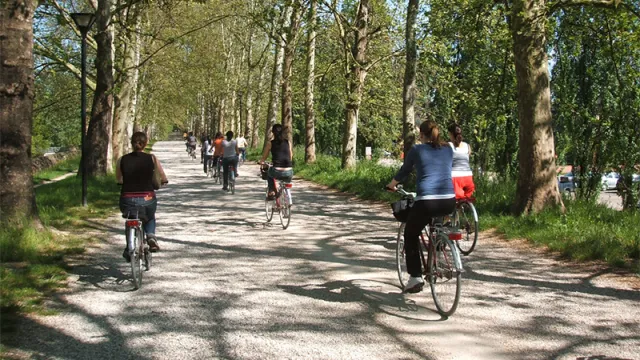
Students riding bikes in Italy


Students can choose to live in a homestay with an Italian host family or to live in an apartment shared with other students on the program. 

Homestays

Students live in Florentine homes, situated within the city. By boarding with an Italian host family, a student can learn a tremendous amount about Italian culture and make significant progress in speaking Italian. Many students say this experience is one of the most rewarding aspects of their year/semester abroad.

Apartments

Students who choose to live in apartments will occupy single or double rooms and will share bathrooms, common space and the kitchen with other students on the Smith program (between 2 and 4).

There are many opportunities to connect with local students (both Italians and international students) at the local University, libraries and cafeterias.

Meals & Allowances

Students who choose to live with a homestay family will typically share breakfast and dinner with their host families. The program provides a monthly allowance to cover lunch costs.

Students who choose to live in a shared apartment a monthly stipend to cover expenses for food will be provided by the program. Students will cook for themselves in the kitchen shared with their housemates.

Activities & Excursions

A wide range of activities are available in Florence, including guided trips to culturally and historically significant locations that students might not otherwise reach.

Excursions might include: visit to Ravenna to discover the town that was once the Western seat of the Roman Empire, gaze at intricate Byzantine mosaics, and pay homage to Dante's tomb; visit to Ferrara and Mantova, Renaissance Courts in Northern Italy; Pompeii, Herculaneum, Capri and the Amalfi coast.

Other excursions might be organized at students’ request: Carnival in Venice, Rome, Milan, Verona, Perugia and Assisi.

Cultural Activities

Individual or group outings to the Opera, theatre, exhibitions, conferences and to the soccer match of the local team.

Applying

Evidence of maturity, responsibility, preparation for study abroad, and demonstrated interest in Italian culture.

Track A: University Studies Program (Fall, Spring, or Academic Year)

  • The Smith College course ITL 250 or the equivalent during the semester preceding study abroad.
  • The ability to follow coursework in Italian: aural comprehension; reading and writing ability; and to converse in Italian.
  • Two years or the equivalent of college-level Italian, normally four 4-credit courses, of which one should be taken in the spring semester preceding study abroad.

Track B: Practicum Program (Fall Semester Only)

  • Two semesters or the equivalent of college-level Italian, normally two 4-credit courses or advanced beginner, which should be taken the year/semester preceding study abroad.

Application Materials

  • Smith Programs Abroad Application
  • Language Recommendation
  • Non-language Faculty Recommendation
  • Personal statement
  • Copy of passport

Applicants from other colleges must also submit:

  • Home School Statement of Support
  • Official transcript
  • Original sample of written work in language of the program which has been submitted for a course and graded by an instructor

Students can find the application materials and apply to a Smith Program Abroad online using the new Smith International Travel Experiences System (SITES) by clicking on the appropriate log in option below.

Smith Student Login
Guest Student Login

Before applying to a Smith Program Abroad be sure to:

2025–26 Semester Fees

Tuition: $33,570
Room and Board: $11,680

Coverage

The Smith Program Abroad fees in Florence, Geneva, Hamburg and Paris include intensive language instruction, cultural orientation, tuition, academic advising, assistance with university enrollment (if applicable) and course selection, supplemental study abroad insurance, medical evacuation and repatriation coverage, excursions and cultural events, room, board, cell phones or SIM cards, and the services of on-site directors

Smith Program Abroad fees do not include international travel, passport and visa fees, books and art supplies, and personal expenses including phone calls.

Financial Aid

Smith College students are eligible for financial aid on the same basis as when they are studying in Northampton (with a few exceptions). For questions about Smith financial aid related to study abroad on a Smith program, please visit Student Financial Services.

Smith College does not provide financial aid to students from other institutions; those students should contact their own college for financial aid assistance.

Health Insurance

All students enrolled in one of the four Smith Programs Abroad are automatically covered by a supplemental study abroad insurance policy through GeoBlue.

GeoBlue Student Member Guide (PDF)

Please note that this is a supplemental plan only. All students participating in these programs are also required to be covered by a U.S.-based primary health insurance and will be automatically enrolled in and billed for the Smith College student health insurance plan through Gallagher Student Health & Special Risk at the beginning of the term abroad.

For students who are U.S. citizens, this insurance plan may be waived online at Gallagher Student Health & Special Risk if the student has another primary health insurance policy that provides comparable coverage. International students are required to be covered by the Smith College student health insurance plan through Gallagher Student Health & Special Risk as you would on campus.

More information about insurance is available on our Health & Safety section.

Visas for Studying in Italy

All students are advised to throughly understand the visa application process for their destination country before making any summer plans including summer jobs that take them out of state or international travel.

The Italian government requires all students staying longer than three months to obtain a student visa before arriving in Italy. Smith's Office for International Study will facilitate a group visa application for students who are accepted on the Smith in Florence program. Students should not make international travel plans in the summer preceding the year in Italy.

Students must have a passport that is valid six months after the end of the program and submit a copy of their passport with their Smith program application form. Proof of passport application or renewal is acceptable.

Things to Consider

The Italian visa process is complicated and requires submission of passports to the Italian consulate in Boston for a period of two to four weeks. The specific date of Smith's visa appointment depends upon the Italian consulate's availability, and can't be set until mid-May at the earliest. Once the consulate issues the visas and returns the passports to Smith, the Office for International Study will send each student her passport with visa via courier service. Again, students who wish to study in Italy should not make international travel plans in the summer preceeding their year in Italy.

Please note that students who stay in Italy during the summer are responsible for all living expenses, visa requirements, medical insurance, etc.

Accepted Students

For resources and information about the Italian visa application process, please visit the Florence Accepted Students website.