I Go Beyond the Sound Bite
Smith Quarterly
Working in broadcast journalism, Itoro Bassey ’09 has witnessed the quiet but powerful ways women of color shape today’s biggest stories.

Illustration by Diana Ejaita
Published February 18, 2026
I became a journalist rather unexpectedly. I was living in Nigeria, freelance writing and working on my novel, Faith (Malarkey Books, 2022), when someone suggested I consider a role at Arise News, one of the most internationally recognized Nigerian news channels, with teams across Abuja and Lagos in Nigeria as well as Johannesburg, London, and New York City. I applied, and that became my first job as a producer.
Entering a newsroom that reported on Nigerian politics and global affairs from a distinctly Nigerian perspective was transformative. We covered stories such as the #EndSARS movement, America’s response to COVID-19, and Russia’s invasion of Ukraine, all through a Nigerian perspective. Born in the United States to Nigerian parents, I chose to live as an adult in Nigeria, where I learned that the lens through which stories are told is shaped by the people interpreting them. Working in Abuja pushed me to examine the Western frameworks and biases I had carried with me.
As a child and young adult, I struggled to trust my instincts. I had absorbed the belief that Black women had to arrive fully formed—polished, impressive, and unshakeable—in order to earn a seat at the table. There was pressure to prove that you belonged before you were even allowed to begin. If you were not brilliant, eloquent, or endlessly capable, then why were you there? I was often underestimated because I was quiet, and my quietness was interpreted as a lack of ability rather than a different way of leading and observing. I wish someone had told me then that you do not have to perform perfection to be worthy of space.
When I arrived at Smith, I learned that women—particularly Black women, women of color, and LGBTQ+ women—do not have to read from the same script to make an impact. Knowing I was part of a tradition of women who defied the odds and shaped the world in their own ways gave me hope as I came into myself.
The women journalists I grew up admiring were the ones who took risks, charted their own paths, and were unbothered by whether people approved of them. That inspired me. Oprah Winfrey redefined what was possible for Black women in media. Early in her career, her empathetic interviewing style was seen as too “emotional” for traditional news, yet she transformed that very quality into a groundbreaking form of storytelling that centered emotional truth, cultural insight, and shared humanity. In predominantly white media spaces, Winfrey expanded on what storytelling and intelligence could look and sound like on-screen.
At Arise News, I admired how Adefemi Akinsanya, an international correspondent and anchor, would tell complex stories that highlighted the importance of women and gender equity with clarity and intention. Veteran broadcaster Ngozi Alaegbu was a grounded and commanding presence, with a voice that carried gravitas. I still recall a meeting in which she emphasized that everyone—whether running the teleprompter, producing, or anchoring—needed presence of mind because anything could happen on air. Working alongside them, I realized the discipline required to produce strong television. I began to sharpen my voice. I began becoming the storyteller of impact I always wanted to be.
I brought what I learned from being in a bustling Nigerian newsroom to my role at the BBC in Washington, D.C., where I worked alongside other thoughtful producers eager to share ideas and make compelling news happen. When the 2025 wildfires were devastating Los Angeles, much of the early coverage focused on celebrities in wealthy neighborhoods. I wanted to tell a different story. I had been following Nikki High, the owner of Octavia’s Bookshelf, an independent bookstore in Pasadena that champions Black authors and honors the legacy of science fiction writer Octavia Butler. High’s store became a gathering place during the fires. She told me how people from Pasadena, Altadena, and beyond were calling and arriving with donations, and how her store became a hub for supplies, care, and community at a time of profound loss. Her segment became one of the first wildfire stories that centered the experiences of people of color and working- to middle-income folks.
“When I arrived at Smith College, I learned that women—particularly Black women, women of color, and LGBTQ+ women—do not have to read from the same script to make an impact. Knowing I was part of a tradition of women who defied the odds and shaped the world in their own ways gave me hope as I came into myself.”
That is the type of journalism that ripples beyond a segment. Black women and women of color, both in front of and behind the camera, should be seen as experts with insight on the biggest news stories of the day. Our news judgment and commitment to inclusive storytelling are some of the quiet but powerful ways we shape stories. In my career as a producer, I’ve been grateful for opportunities to spotlight persons of color who bring nuance and insight to major news stories that need fresh perspectives. Among them are U.S. Ambassador Gina Abercrombie-Winstanley, Syrian peace activist Abir Haj Ibrahim, and Equal Justice Initiative founder Bryan Stevenson.
These kinds of leaders do more than analyze the biggest issues of our time—on conflict, peace, and geopolitics—they humanize them. Their perspectives remain invaluable.
In a bustling newsroom, it’s challenging to move beyond the sound bite. With only three to five minutes per segment, it can be difficult to push past stereotypes. I’ve come to see storytelling as a forum to lift up people who care to do the decent thing. Too often, efforts to facilitate good journalism go unacknowledged or overshadowed; I’ve seen it firsthand with the brilliant and dedicated women and women of color I’ve worked alongside. Still, they showed up with consistency and determination, and their example has taught me to value quiet excellence, whether or not it is ever applauded. It has also affirmed that when I walk away from institutions that do not honor me, I do not lose anything. I take my brilliance with me, because it was mine long before I arrived.
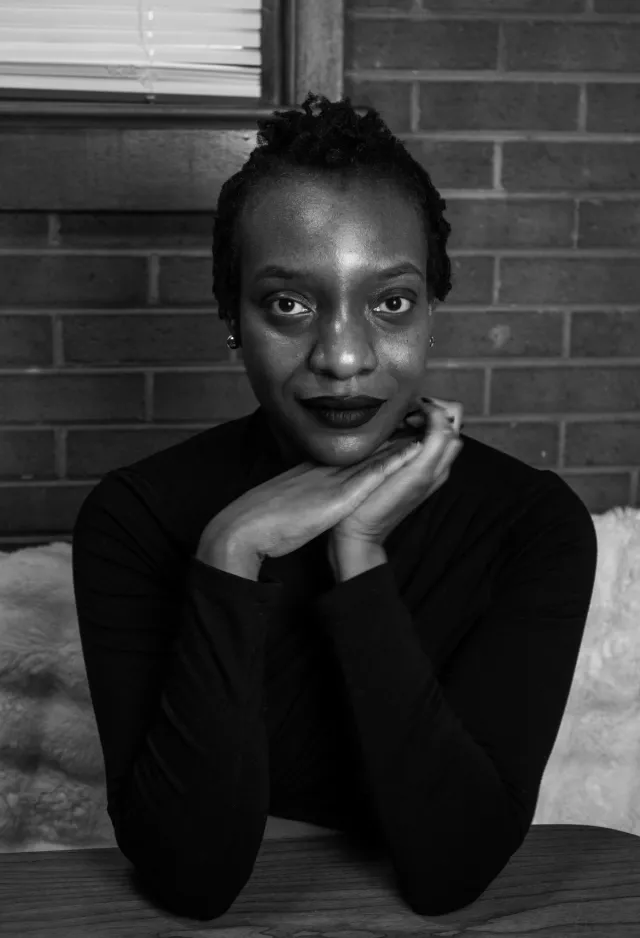
Itoro Bassey ’09 is a writer and journalist. Her Substack newsletter, Africanish, explores themes of identity and culture. Her short story collection, Ajebutter Women, winner of the 2024 W.S. Porter Prize for Short Story Collections, is due out from Regal House Publishing in 2027.
This story appears in the winter 2026 issue of the Smith Quarterly.