The Complete Plath
News of Note
Smith College research affiliates’ edition of Sylvia Plath ’55’s work offers unpublished poems and never-before-seen notes

Amanda Golden and Karen V. Kukil in the Boutelle-Day Poetry Center, beneath the Plath’s portrait by classmate Susan Adler ’57. Photo by Jessica Scranton
Published August 14, 2026
Just when a comprehensive volume of Sylvia Plath ’55's work was published, more work was discovered. These discoveries led to the latest publication, the variorum edition of The Poems of Sylvia Plath, published in May and co-edited by Plath scholars Karen V. Kukil and Amanda Golden, both Smith College research affiliates. It is the most complete volume to date and contains poems from the final 10 years of her life—on which her primary literary reputation has been based—but it also includes early works and juvenilia written in her childhood through her college years.
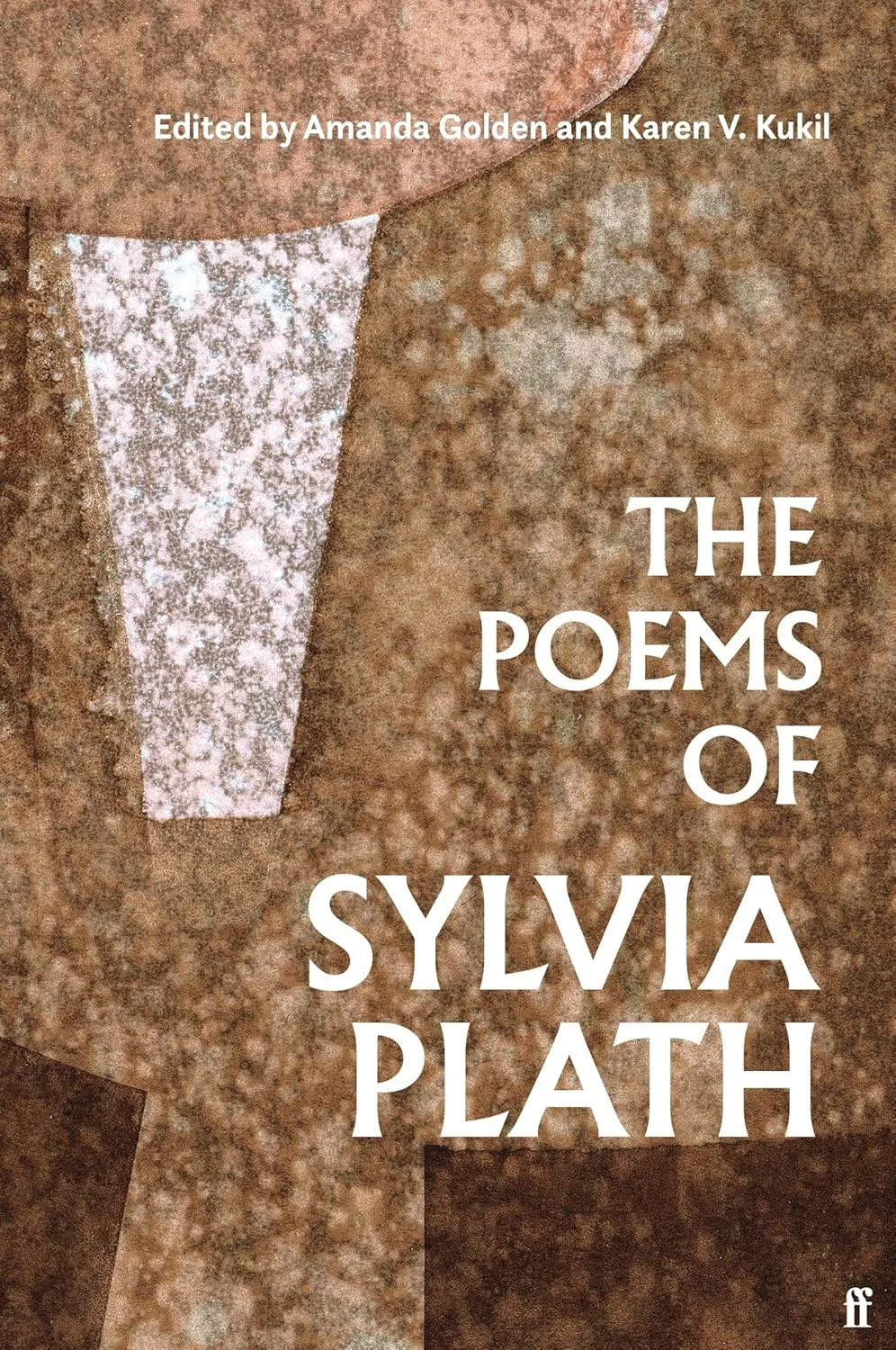
“A lot of what the public knows about her work is the work she produced closer to her death,” says Golden, “but here we have poems from 1937 to 1963, including a poem she wrote at age 5, poems written as a college student, as well as the complex revisions behind her most celebrated works.”
The volume includes 532 poems, nearly double the number found in 1981’s Sylvia Plath: The Collected Poems, the previous collected edition, edited by her husband, the late Ted Hughes. It also adds more than 500 pages of new notes and annotations, compared to the 20 pages Hughes originally provided.
For Kukil and Golden, the project—five years in the making—corrects gaps left by earlier editions, including the omission of Plath’s now-famous villanelle “Mad Girl’s Love Song,” which was left out of Hughes’s original collection. The new edition also restores dozens of early poems in chronological order, alongside detailed notes drawn from archives at Smith, the Lilly Library at Indiana University, the Morgan Library and Museum, the British Library, and other collections worldwide.
Beyond the poems themselves, the collection reveals just how methodical Plath was as a working writer. Her meticulous submission logs—tracking which magazines accepted her work, for how much, and when—show a poet who approached writing as both an art and a profession. That discipline, the editors say, complicates the popular image of Plath defined mainly by sadness, revealing instead a highly organized, driven student and professional writer.
Plath’s connection to Smith College runs deep: she studied here, taught here, and later wrote many of her best-known works, including The Bell Jar, on the now-famous pink Smith memo paper. The Plath archive continues to draw scholars and readers from around the world to Smith’s Mortimer Rare Book Collection.
Kukil, who taught classes on Plath at Smith during her tenure as associate curator of special collections, recognizes that the only way to dispel the perception of Plath as clinically depressed throughout her life is to study her life and work. “As a class exercise, I would ask for an adjective to describe Plath, and the responses were all pretty dark,” says Kukil. “Then we would work with drafts of her poems and some letters and, when I asked them to give me a new adjective, they were always much more positive. You have to really read Plath to get a sense of her.”
For readers encountering Plath for the first time, the editors hope the new edition invites a more complete understanding of her work—one grounded not just in her final months, but in a lifetime of ambition, craft, and creativity.