NICOLAS KURTOVITCH
Introduced and translated from the French by Yzabelle Martineau


YZABELLE MARTINEAU
Nicolas Kurtovitch and the Cultural Interface in New Caledonia


Nicolas Kurtovitch is a prolific writer who has made great progress since the 1980s in the quest to gain recognition for a distinctive Caledonian literature. His writing takes on its full significance in the context of New Caledonia’s history and present situation.

Its inhabitants affectionately refer to New Caledonia as “le Caillou” (the pebble), but when Captain Cook became the first European to tread upon Caledonian soil in 1774, he named the island New Caledonia: the lush, mountainous landscape reminded him of his native Scotland. New Caledonia encompasses a main island, Grande Terre, with the capital, Nouméa, and five secondary islands: Ouvéa, the site of a bloody massacre in the 1980s; Lifou, Tiga, and Maré—19,000 square kilometers in all, 16,000 on Grande Terre. This small territory has close to 200,000 inhabitants, of which almost half are Melanesians, or Kanaks, the archipelago’s first inhabitants, who settled it almost 3,000 years ago. The others are Polynesians, Vietnamese and Indonesians, Caldoches (descendants of French settlers), and finally, those of European origin, or Métropolitains (from “metropolitan” or colonial France.)

To this day, New Caledonia is still held by the French, and French remains the official language. French nonetheless mingles with approximately thirty Melanesian dialects, and ethnic communities have also held onto their languages. This living presence of other languages and other realities has greatly infused Caledonian French. Many influences permeate Caledonian French, especially the presence of Australian English, and a translator must be very sensitive to all of them.

In this context of colonization, the native population is known for its resistance, which almost led to the annihilation of its own people. Having seen their land occupied in the middle of the nineteenth century by the French, who established a penal colony that quickly became synonymous with hell for the settlers, the Kanaks have always resisted the occupier. Resistance often became rebellion, and in the stormy 1980s this resistance intensified, culminating in assassinations, seizure of villages, and destruction of farms. These independence uprisings, led predominantly by the Kanaks, led to a compromise: the Accords de Matignon (1988), signed by Jean-Marie Tjibaou, a Kanak hero. This event managed to contain the unrest, if only temporarily. Unfortunately, Tjibaou was murdered by one of his own, who was convinced he was selling out to the French. The assassination cast a pall over the pact. Following the 1998 Referendum, which led to the Accords de Nouméa, there was an election of the Congrès du territoire, which led to the development of New Caledonia’s own government, and also to the creation of a Traditional Senate on which the Kanaks would sit. The island lost its name of Territoire d’Outre-Mer (Overseas Territory), and is now an “Entité territoriale”—a new administrative status for France. But in June 2000, the Separatists took eight out of fourteen seats in one province, which shows the extent to which the issue of independence is still very much alive.

France remained the inevitable cultural reference until the eighties, but Caledonian literary production finally freed itself from the metropolitan model, and from the exoticism into which it had been confined until then. Caledonian can now considered a literature that is finally coming into its own, an “emerging literature” in every sense of the term. It is a new literature, having existed for one and a half centuries. Caledonian literature is also emerging in that it strives to distinguish itself from the metropolitan model; it endeavors to challenge the hegemony of French literature. It has given itself the institutional means to achieve the status it has gained, while establishing its own readership, something that is essential to any emerging literature. Nicolas Kurtovitch, Déwé Gorodé, Claudine Jacques, Wanir Wélépane, Catherine Régent, Jacqueline Sénès, Frédéric Ohlen, and Pierre Gope, to list only a few, writers of varying backgrounds, are in the process of creating Caledonian literature, of shaping it into something that will develop for generations to come.

Nicolas Kurtovitch was born in 1955 in Nouméa, to a Serbian father from Bosnia who immigrated to New Caledonia, and to a mother of century-old Caledonian origins. Kurtovitch published two poetry collections early, under the name of Slobodan: Sloboda in 1973 and Seulement des mots in 1975, the year he earned his Baccalauréat in Nouméa. He left to pursue his studies in Aix-en-Provence, obtained a Licence (roughly the B.A.) and founded a literary magazine. After returning to New Caledonia in 1980, he became first a teacher and then principal of the Lycée Do Kamo, where he has been ever since. Nicolas Kurtovitch has published, under his own name, numerous poetry collections: Vision d’insulaire (1983), Souffles de la nuit (1985), L’Arme qui me fera vaincre (1988), Homme Montagne (1993), Assis dans la barque (1994), Avec le masque (1997), Dire le vrai, written with Déwé Gorodé in a bilingual edition (2000), and On marchera le long du mur (2000). These collections have been published in France and in New Caledonia. He has also written numerous collections of short stories, all of which have been published in New Caledonia, including Forêt, terre et tabac (1993), Lieux (1994) and Totem (1997). Lastly, he has tried his hand at writing for the theatre, and three of his plays were published in 1998 after being presented at the Centre Culturel Tjibaou (the Kanak Cultural Center). His new play, Kalachakra, la Roue du Temps was presented last year. In these plays, he explores relationships between past and present, responsibility, tradition, and ties that link people together. A play is the ideal vehicle for exposing basic subjects for all Caledonians to see, for shattering taboos, which have been very strong on both the Kanak and Caldoche sides. He has also published various essays on identity, political issues, and literature. He is currently working on a novel.

The encounter with the Other is central to Kurtovitch’s work. It is central thematically: the encounter with another space, with a being originating from another world, occurs frequently. It enables the author’s imagination to grasp the new psychological and cultural spaces that the Other represents. Each encounter with the Other is the promise of an opening of the mind’s vision. The main characters are always ready to receive the brief influx from this small universe which is the Other into their personal space, in which enough emptiness, enough breathing room is created to be able to welcome him/her. The encounter with the Other is also central from a formal point of view: Kurtovitch expresses it through the narrator, or rather, narrators, since his stories are generally produced through embedded narrations. This permits him to imagine, with an extraordinary degree of empathy, the experience of the Kanaks, Aboriginal peoples, Caldoches, men, women, youths, and older people. He gathers his material from all reaches of life; he embraces various points of view; his writing expresses this insular universe’s fragmentation—with its isolation on the one hand, but with its island reality, situated at the junction of Oceanic, European and Asian cultures on the other. This is why crossbreeding and hybridity are key concepts for analyzing his work.


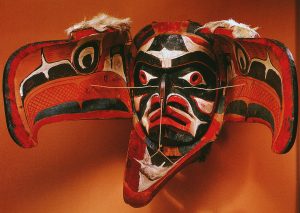
With Mask

With the mask to see the spirit
Under the mask in the mask
To see the spirit to breathe the spirit
With the mask the wood of the mask
With the mask the feathers of the mask
The breath of the being of the wood of the mask
To listen to the body in space
Space enters by the breath my heart
Follows the pathway of the air
With the mask the sign of the living
Still here still here amongst us
Placed further away the figurine
Of strings of a thousand rings
Of coral of limestone of shells
Red rolled between thigh and palm
Dark red of dried blood
There the figurine carries the message
Of a man standing true
As though in space at the junction
Of earth and sky
Who sees all who sees elsewhere

The regions of the world brought together
All here at the foot of the figurine
Time to the eye erupts
The miniature’s patience and time
Which can be held in a single palm
Which can be hidden in a single fist
And is uttered in a single word
And is nevertheless the world
In itself

To understand the relation of the face
Black – wood – shell
Fibers of stone of shade
With sacred birth-giving
The birth of many men
Of many regions all here
In a single glance as if to the sky
Long spears with many heads
In eight directions towards the rainbow
Carry the word of the clan
Only the clan knows the names
Only the clan knows the places
Only the clan will tell how
The innumerable living beings have come
Things – wood – bones
Encircled by many colors
Rubbed on the fire stone
Gathered by twos
Carried at last through the paths
Only the clan knows which
Only the clan follows the trails
Going back on the path that has led
Outside the abyss the sacred living

The totem the true face
The mask and the spirit live
Together they are the absolute ancestor
The one that awakens the march
Across mountains and forests
On invisible roads appear
The souls of the living

The long spears posed there
Aimed at the sky carrying each a star
Guardians of desire
Bend to the winds bend to the tides
Land upon air now carry the gaze
Far off to others
The touch of the hand the quiet slumber

As if to tell the peaceful evening
Upon the valley waters in silence
Push one by one the green stones
Spreading them flattening them polishing them
Through them the sun is reflected
Perfect light
The moon a thousand times awakened in turn
Guides the old man’s heart
Through the blind night on the dewy grass
The stick traces the pathway forever
Only the clan can read the traces here
In it the spirit in it the heart
Wood — feathers — coal
Let themselves be molded into terrible faces
That the thousand demons may die
That they be reduced to dust
That it may be mixed with fresh waters
To drink that water under the mask
To be bird to be earth to be trunk
There the moon like a perfect circle
Is reflected upon the disk above the head
To be born again under the mask
Night passes night passes

The expert hands trace the order of life
The long bamboo in our hearts
Will give eternal life to the coming of the allies
High up at the end of the path two guardians
All in black all in red
Furious black and red
Stop the hurried march
Silence in the soul spreads out
In the soul death almost
Slowly the hollow is cut
The guardians violent and pitiless move
On the ground no limb moves
In black in red the spirit is there
Raises the allies its breath clothes them
With ornaments love and life
Between the trees we have passed
From the earth rises an ancient sap
Fluttering in our hearts the strength of the ancients
At the end red black indolent
Up to the sky ten men standing
The shell above called from far
We are here we are here
Look at us look at our hands

Let them read the message in the fiber
Long long plaited from black hairs
Amongst the red
Look at us bearing the body to this spot
The shells one behind the other
Erect the body like a spear to the sky
We come we come here
To be at the awakening moment here
We come we come here
To feel the strength of the dead man here
And through our pathways
Pass into the other World


The Man in the Forest

Man in the forest has a thousand masks
Wood masks leaves and so many others
Of all the colors green the most present
With one gesture he can go into another space
Be wood feather skin be earth
Be the wind the rain the tides
Amongst the thousand existences forget the one he’d been
Open his heart and with a breath give life

Laid upon the wood by supple hands
Black on brown at night in the cradle
The pathways thus followed are innumerable
Placed near the door sheltered by the ancients
Who takes the time to sit before them
And wait for them to speak
Who cares about these things
You come go touch
You came to see the past through your eyes
Who cares about breathing it
Who still cares about these things

Lemon grass and sugar cane unite
In the gaze of the ancients at the entrance
From afar one hears them come clan by clan
Trodding the same path that I did

Like a large circle
Rainbow upon rock
The wood sticks to the skin
Serene in possession of the axe

Green and red in a single object
A thousand revolutions around the handle
At last the morning light upon my veranda

The rain spilled
Upon the ocean its heavy
Waves carrying a pirogue
The mast no longer seen
The leveler is lost in water
The sail has fallen
The rain again
Pushes the pirogue over the ocean
High and long swells

The man just arrived the pirogue forgotten
This morning I have only the valley to ascend
Along the way the precious goal I sought has vanished
Between two stones to boil the plants

Thinking of the World as the body does
Feeding the people as a son is fed
Home in a thousand places
Thus flows life in our valleys

Clouds and mountains
Meet so often
Through many paths


Poem for the Fourth of May

In the middle of the night men came
To bring the news that two men were dead
Before dawn we will have left the house

Mourned and met friends
Through the forest and very ancient pathways
There are so many things to say names to not forget

And then the sun that had vanished for a moment will return
Different shining more strongly as if enlarged
By the life of those who have fallen