Drawing From the Past: Maya Antiquity Through the Eyes of Frederick Catherwood
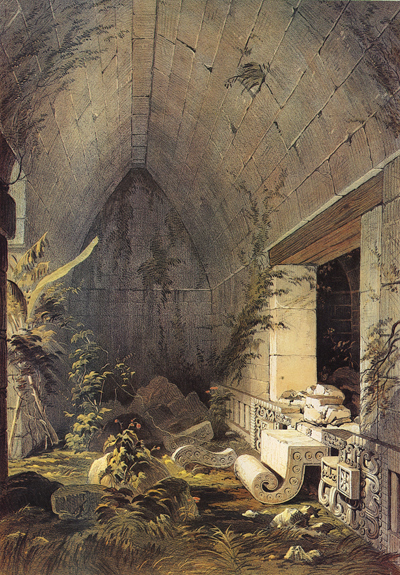
Plate 17: Interior of the Principal Building at Kabáh
|
Plate 17, Interior of the Principal Building at
Kabáh |
An explorer steps into the room and is enveloped with a sense of awe and mystery. It is one of the chambers at Kabáh, at its peak around 800 CE (one English translation of this Maya name is “the hand that chisels”). What cannot be fully seen is a room running parallel to the main chamber. The dark, private interior chamber may have been used for the storage of tribute, such as textiles, which were treasured by the Maya. The entire space, as depicted by Catherwood, exudes a sense of peace and gracefulness, with its high ceilings and intricately carved stairs leading deep into the ruins. The chamber at Kabáh is characteristic of the Puuc style during the two hundred year period before 1000 CE in the eastern Yucatán peninsula, including the cities of Labna and Uxmal. The Puuc style of architecture maintains a balance between plain and decorated panels. Block masonry (stones carved in large units for decoration), chambered pyramids, archways, vertical façades, and apertures framed by columns were employed extensively in Puuc-style work. Although there are intricate carvings near the doorway, the remainder of the room remains somewhat understated. Also characteristic of the Puuc style is the tall ceiling that ends in a point—a corbel vault. Some have speculated that the Maya vault had nine stone layers, corresponding to the nine layers of the Underworld and the nine Lords of the Night. [Spanish version]. YENA LEE |